Commercial Property Area Lighting. High Reach Bucket Service. LED Lighting Options & Varieties
We're quick and reliable service experts for every area around Philadelphia. |
|
NOTE ABOUT OUR PRICE LIST: We can estimate the cost via email but cannot quote an actual cost. This is the reason for having an online price list.
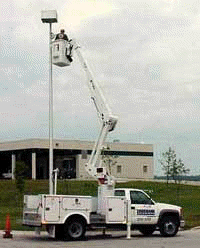
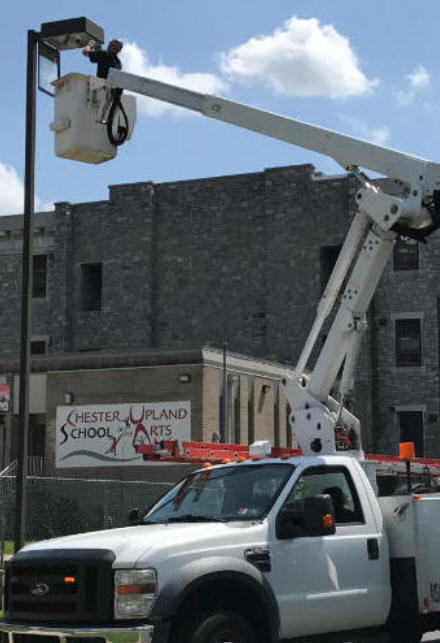
Each high reach fixture requires a "tooled discovery" in order to determine the problem(s). Most commonly it's the lamp, and that's an easy service to make. If it's not the lamp, we must
trouble-shoot to determine what the actual problems are, and replace the internal components as needed. If there are deeper issues such as No voltage or water entry problems, we must still charge for the time invested to provide the remedy. In each case when additional problems are found, we take photos
and notes to explain the issues and the measures taken.
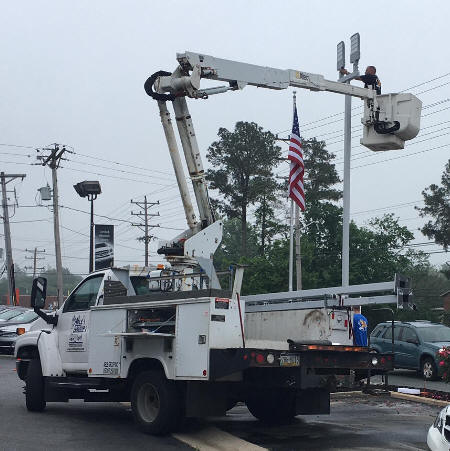
High Reach Bucket Truck services must be performed on this basis because of the cost of equipment and mechanics labor. |
   |
Price List Continued
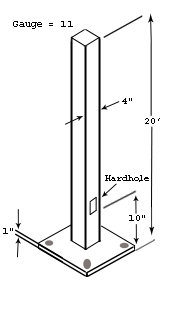
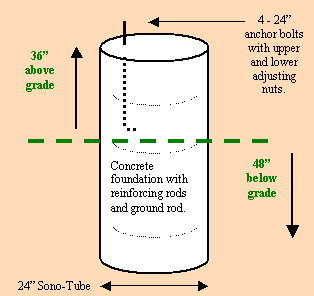
20 ft. Pole with Adjustable Heads Bronze Flood Fixtures - approx. $2,000.00
20 ft. Pole with Single Head Bronze Shoe Box - approx. $1,400.00
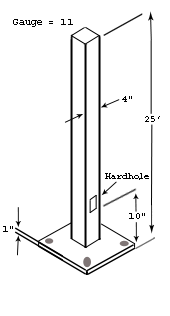
25 ft. Pole with Double Head Green Shoe Box - approx. $1,800.00
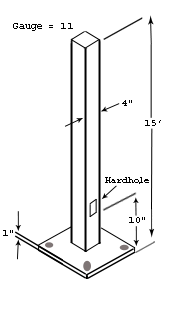
15 ft. Pole with single head Cone Reflector Luminaire - approx. $2,000.00
High Pressure Sodium Lamps, 250W. and 400W. - Cost $37.80 ea.
High Pressure Sodium Ballast, 250W. and 400W. - Cost $157.48 ea.
Metal Halide Lamps, 250W. and 400W. - Cost $37.80 ea.
Metal Halide Ballast, 250W. and 400W. - Cost $157.48 ea. |
|
|
|
|
|
Lighting and Electrical Service Poles for Philadelphia and Suburbs |
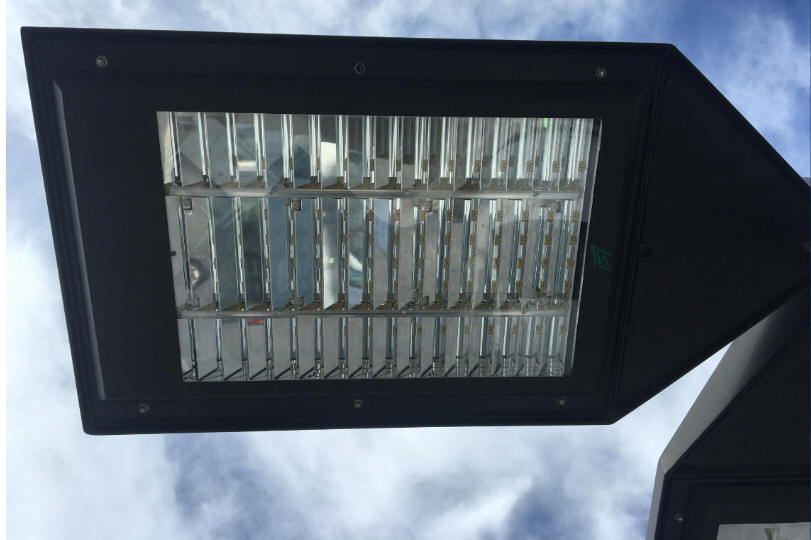
Most parking lot and area lighting commonly uses HID type lighting fixture which stands for high-intensity
discharge lamps, HPS high pressure sodium lamps of Metal Halide MH. Such lamps provide the greatest amount of photo optic illumination
for the least consumption of electricity. However when lighting calculations are used, it can been seen how inappropriate HPS lamps are
for night lighting. White light sources have been shown to double driver peripheral vision and increase driver brake reaction time at
least 25%. When S/P light calculations are used, HPS lamp performance needs to be reduced by a minimum value of 75%.
New street lighting technologies, such as Light Emitting Diode (LED)
and Induction emit a white light that provides high levels of scotopic lumens allowing street lights with lower wattages and lower
photopic lumens to replace existing street lights. However, there have been no formal specifications written around Photopic/Scotopic
adjustments for different types of light sources, causing many municipalities and street departments to hold back on implementation of
these new technologies until the standards are updated.
Incandescent lamps were primarily used for street lighting until the advent of high-intensity discharge lamps. They
were often operated in high-voltage series circuits. Series circuits were popular since the higher voltage in these circuits produced more light per watt consumed. Furthermore, before the invention of photoelectric controls,
a single switch or clock could control all the lights in an entire area
.
Parking Lot Lighting. Price list for services, lighting, pole lighting and parking lot poles.
Landscape Lighting should always accomplish multiple priorities at the same time and fit into your energy budget.
POST LIGHT - Post lighting fixtures give you the most light for your energy dollar. Post fixtures are easy to install and easy to
maintain. Post fixtures can vary in height, style and light output. Receptacles can be installed at the base for holiday lighting
and other conveniences.
UP-LIGHTING - Up-lighting fixtures can be installed under trees & shrubbery and/or at the base of the property. Up-lighting can give
your property the most beautiful appearance while giving you adequate area lighting as well (reflective light).
BOLLARD LIGHTS - Bollard lighting fixtures are waist high, heavy duty fixture posts with beacon type heads that are used most commonly for
commercial, industrial & institutional walkways and driveways. They are expensive, well built and are usually recommended for their
vandal proof characteristics while giving good Purpose & Beauty lighting.
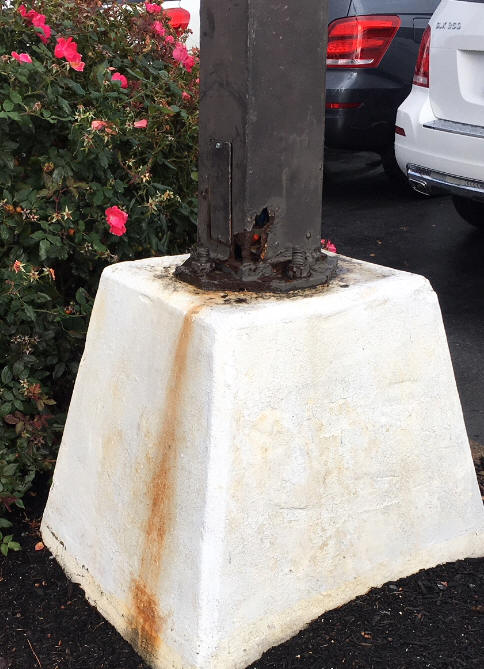
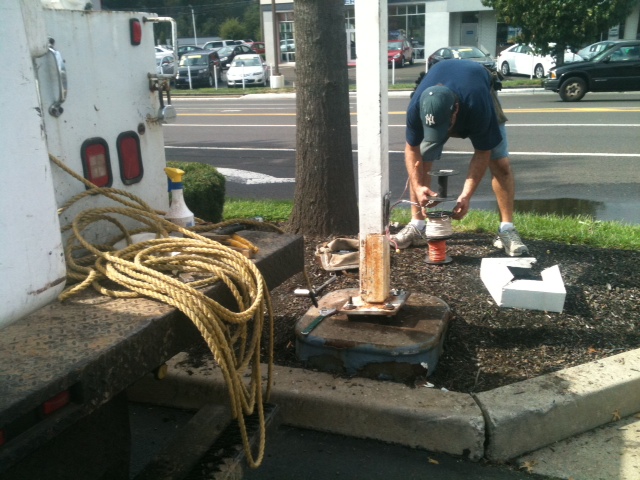
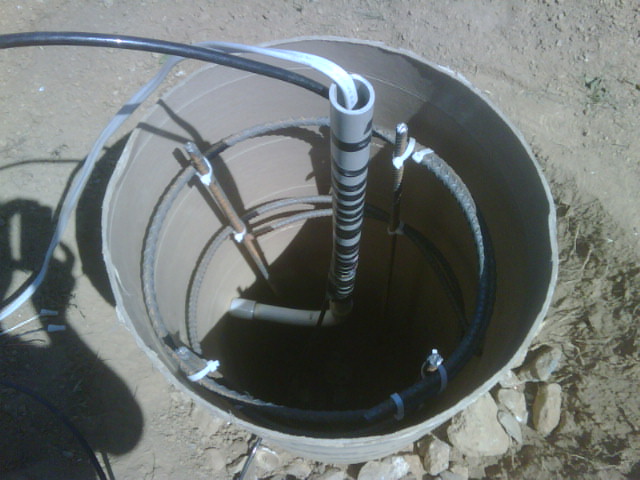
 Parking Lot Lighting Service by Able Group Inc. Various types of Pole Lighting. Damage
repairs for parking lot poles, high reach bucket service, electrical contractor. Delaware County, Main Line, Philadelphia, PA.
Light poles, concrete bollard poles.
Parking Lot Lighting Service by Able Group Inc. Various types of Pole Lighting. Damage
repairs for parking lot poles, high reach bucket service, electrical contractor. Delaware County, Main Line, Philadelphia, PA.
Light poles, concrete bollard poles. |
|
|
|
 Ask us to confirm this Price List for Services:
 ablegroup@verizon.net
 Call The Able Group for quick service, lamp replacements, damage repairs.